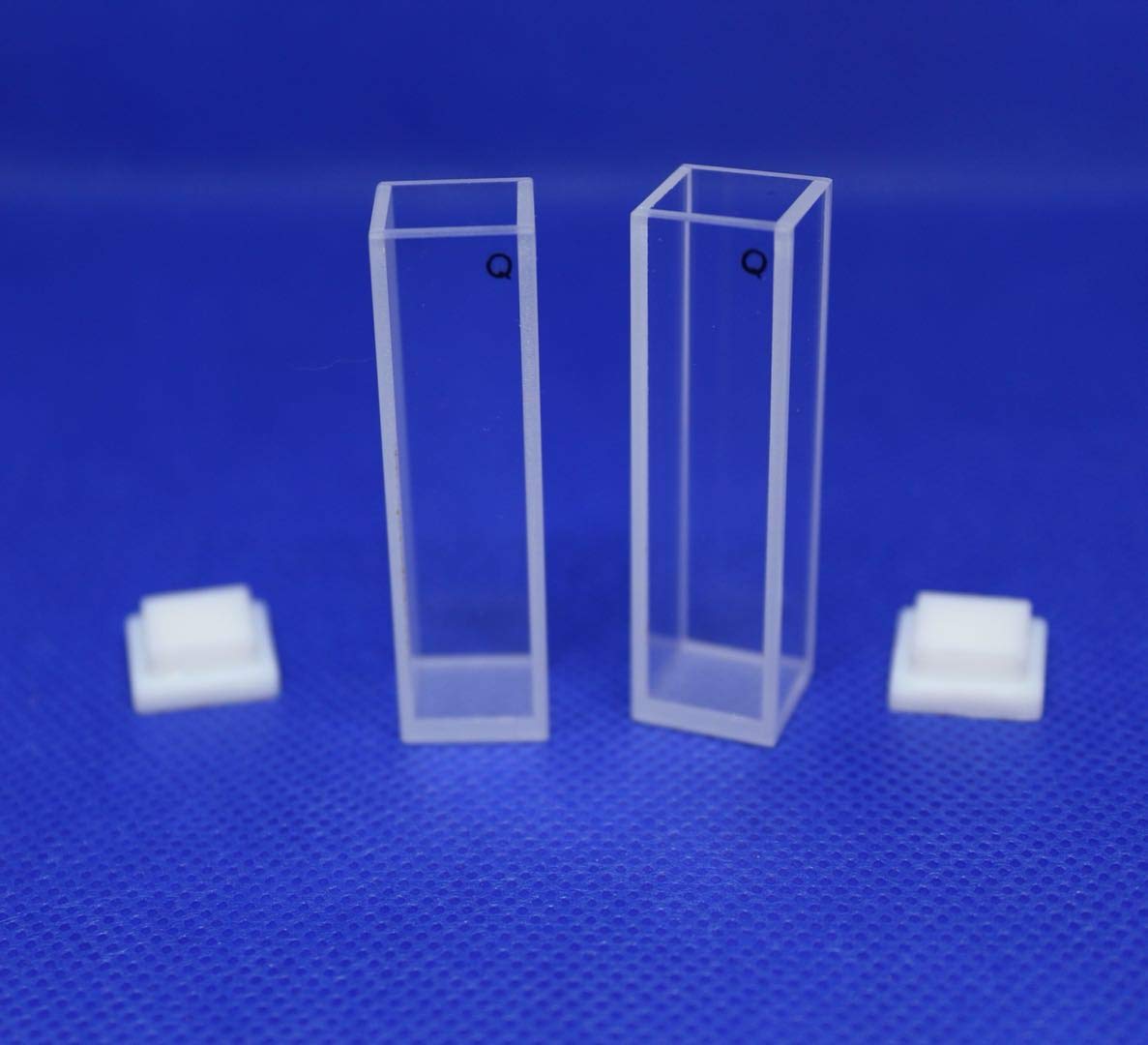
There are numerous things to think about when choosing the appropriate laboratory equipment. Quartz cuvettes must be on your list of options if you want reliable and inexpensive options. Quartz cuvettes can be a vital equipment in many labs. Cuvettes come with four surfaces with two polished edges. They allow you to do experiments for different types spectroscopy, like absorption or fluorescence depending on the type. There are a variety of quartz cuvettes may be employed in UV-Vis or NIR systems. This includes rectangular cells microcubes flow cells dimensions aperture geometries.
Quartz cuvettes are used frequently in spectrophotometry due to their low UV absorption. This makes quartz ideal for studying UV-visible spectra. Quartz cuvettes also have a high thermal stability , which permits the use of high temperatures. Quartz cuvettes also have excellent optical quality. This means that they are very sensitive to background noise and are able to be used to measure measurements that have high signal-to- noise ratios. While quartz cuvettes are higher priced than other types of cuvettes they still offer many benefits that are worth the cost.
Durable
Quartz cuvettes can be constructed from very durable and strong materials. They can stand up to a lot of wear and tear and are still able to function effectively. Quartz cuvettes can be used in numerous industries like scientific, medical, industrial and more. Quartz cuvettes can also be utilized in labs because of their ability to endure high temperatures, pressures. Furthermore, quartz cuvettes have very low levels of absorbance which means they are not able to absorb UV light or harmful rays. Quartz cuvettes can be utilized in a myriad of applications.
Chemically resistant
Quartz cuvettes are an essential instrument for research. Quartz is chemically inert and is able to withstand temperatures up to a high temperature which makes it suitable for various applications. Quartz cuvettes can be viewed clearly by researchers, which makes it easy to see the contents. Quartz cuvettes cost less, making them an attractive option for many labs. Quartz cuvettes aren’t impervious to damage, and they can break in the event of a fall or a hit with the sharp edge of a piece of equipment. Quartz cuvettes are an important tool for scientists and an essential component of any lab for research.
Transparent and smooth surface
A quartz cuvette can be described as a transparent container designed to house samples for analysis using spectroscopic techniques. Cuvettes made of quartz are fused quartz. The material has extremely smooth surface and is very pure. Quartz cuvettes are ideal for applications that require light transmission and excellent purity of the samples, such as fluorescence microscopy and UV-visible spectrumroscopy. Quartz cuvettes are also resistant to extreme temperatures, which makes they suitable for high-temperature applications such as thermal analysis.
Non-porous
Non-porous quartz cuvettes work well for UV-Vis applications since they don’t absorb light at the wavelength needed to be measured. This means there’s no requirement for a blank measurement to take into account light absorption. Also, the possibility of contamination is minimized. Quartz cuvettes are resistant to heat and chemicals well they are also durable and easy to clean. Quartz cuvettes have become a popular choice among scientists looking for reliable and precise UV-Vis data.
Quartz cuvettes can last for years without needing to be replaced. They’re also durable. Quartz cuvettes can be a useful tool for any spectroscopic research lab.
For more information, click quartz cuvette